Learner guide
The Swords Roundabouts and the Lane Discipline They Demand
Swords is a town held together by roundabouts, and the driving test sends you round enough of them to find out whether you actually understand lanes or just hope. Roundabouts fail more tests than any single thing on the sheet, and it is almost never the roundabout's fault. It's the lane discipline, or the lack of it, and lane discipline is a thing you can fix.
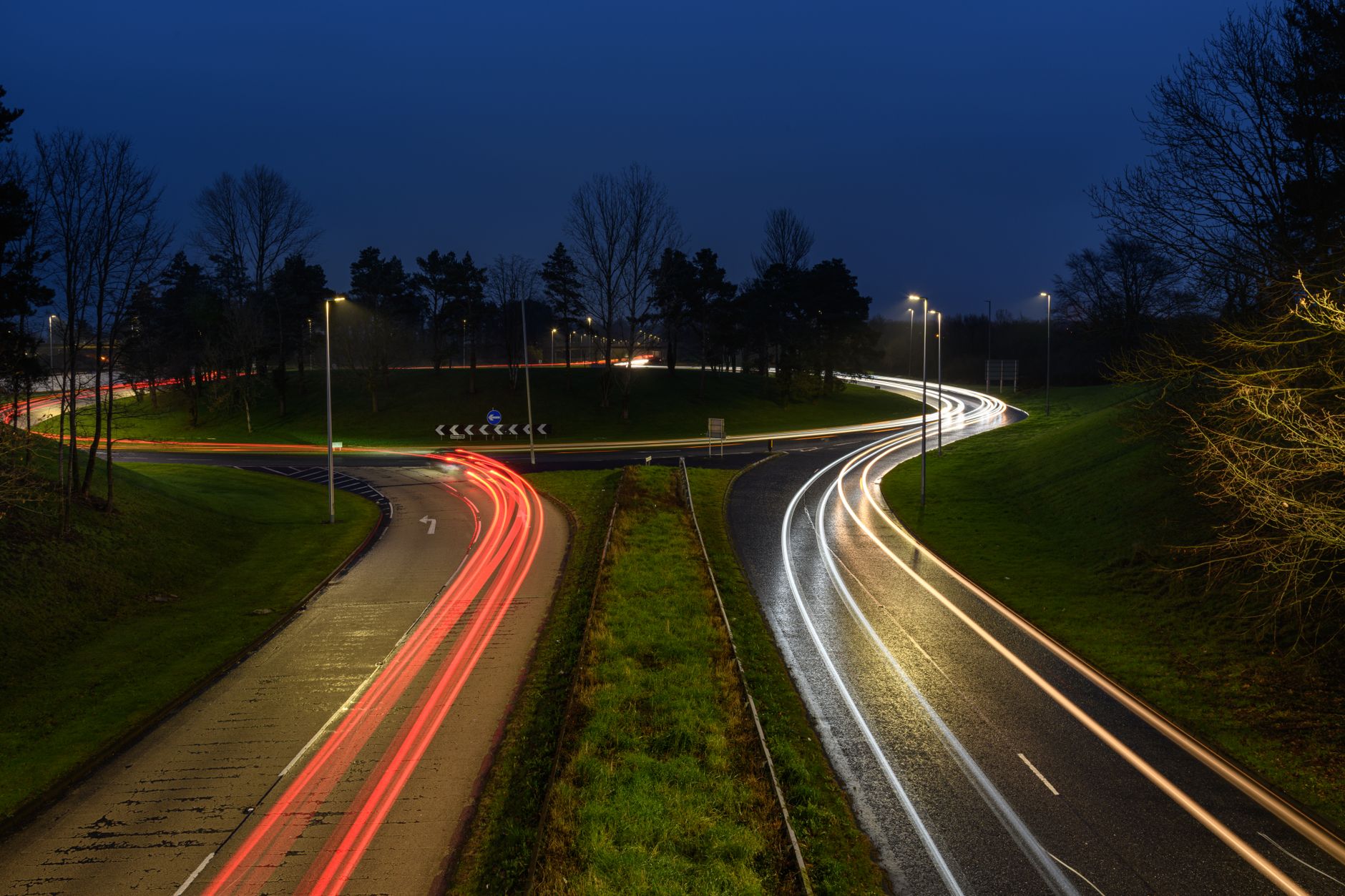
People think roundabouts are hard because they're busy. They're not hard. They're a set of rules about which lane you belong in and when you're allowed leave it, and the busy just punishes you faster for breaking them. Learn the rules cold on the quiet ones and the busy ones become the same problem at a higher tempo, not a different problem.
Why the town runs on roundabouts
You can't get anywhere in Swords without meeting one. The Pavilions roundabout by the shopping centre, the Estuary roundabout down towards the airport road, the run of them along the R132 spine through the town. The test centre knows this, so the test uses them, because a roundabout is the cleanest way to find out in thirty seconds whether a learner reads a road or just points the car and prays. That's why so much of your practice has to go here and not on the handy empty estate loop.
Lane discipline is the whole game
Here's the core, and it's the same on every roundabout in the country. Left lane for left or straight-ish, roughly anything up to twelve o'clock. Right lane for anything past twelve, the exits that are effectively a right turn or a full U-turn. Pick your lane on the approach, not on the island. Signal what you're doing, and mean it. Signal left as you pass the exit before yours, on your way off. Take the wrong lane and cut across someone to reach your exit and it's a Grade 3, and a Grade 3 fails you on its own, no arguing the toss. And if you want the specific ones that do the damage, here's the Swords roundabouts that catch learners out, and how to take each of them without picking up a fault.
Reading a roundabout before you reach it
The learners who look calm on a roundabout aren't calmer people. They just started the job earlier. By the time you're at the line, every real decision should already be made, and the only way to manage that is to read the thing on the approach. That means slowing enough to have options, checking the road markings and any overhead sign for which lane serves your exit, glancing right for the traffic already on the island, and settling into the correct lane well before the paint runs out. Do all that at the last second and you're doing four jobs at once at the worst possible moment. Do it on the approach and you arrive with one job left, which is to go when the gap comes. Approach speed is the quiet half of this. Come in too fast and you've no time to read anything. Come in too slow and you stop dead for a gap you could have taken, and hold up the town behind you.
Where learners actually lose it
Two ways, mostly. The first is the late lane change, sitting in the left lane, realising the exit needs the right lane, and swinging across at the last second with a car already there. That's the dangerous one and the tester marks it hard. The second is the dawdle, creeping up to the line, stopping when there was a clear gap, and holding up three cars behind because the whole thing felt too fast. Both come from not deciding early. Read the roundabout on the approach, pick the lane, commit. Indecision is what fails people here, not the traffic.
The habit that carries you through
Get the lane right on approach and the rest of the roundabout looks after itself. The signal follows the lane, the exit follows the signal, and the tester sees a driver who knew where they were going before they got there. That's the whole trick, and it's a habit, not a talent. Drill it on the Swords roundabouts until picking the lane early is the only way you know how to do it, and the town stops being the hard part of the test.